
Beethoven: Piano Concerto No. 5 in E-flat Major “The Emperor”, Op. 73 Guided Listening
Posted on May 1, 2025
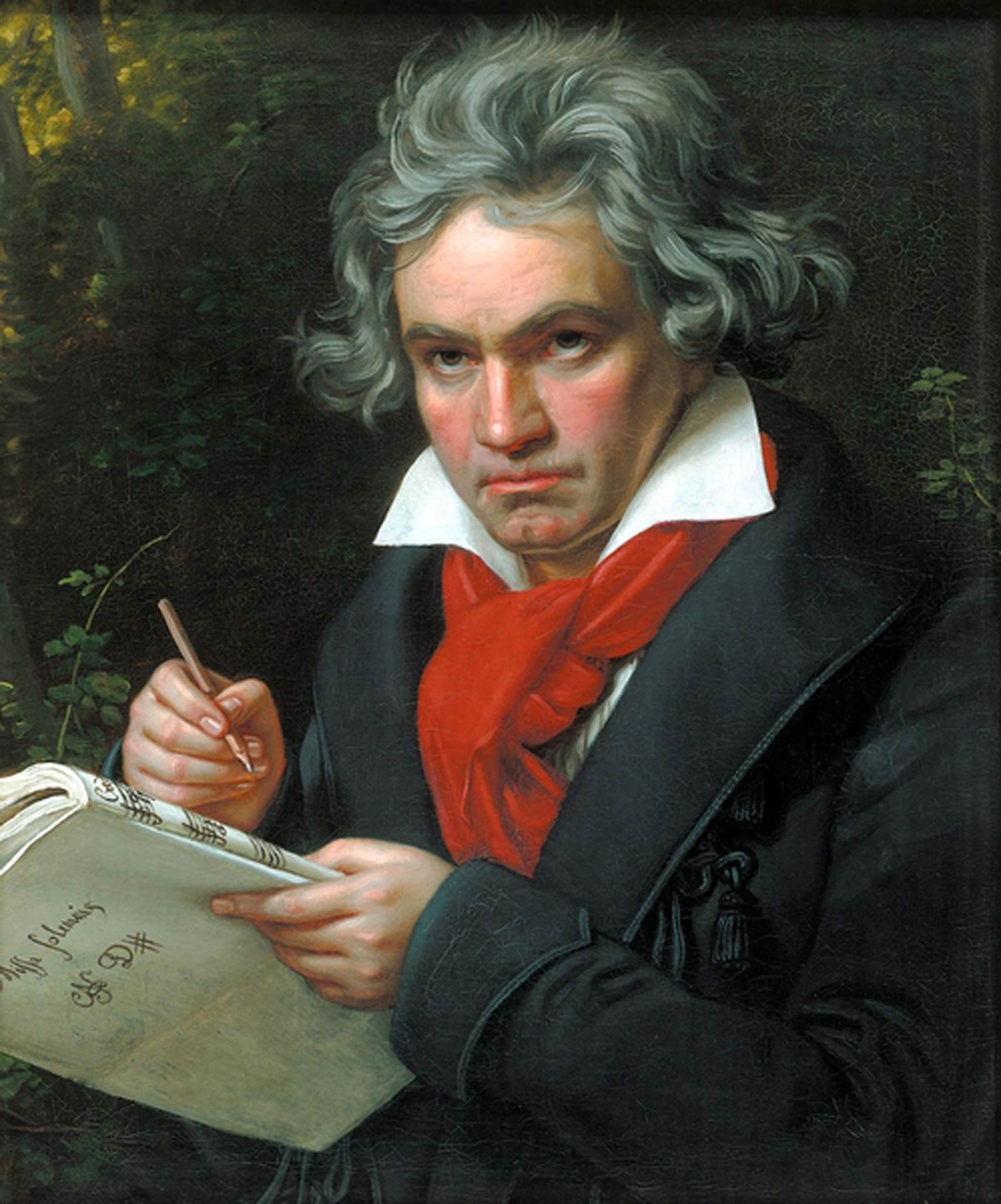
Ludwig van Beethoven is often regarded as the most prolific composer of the late 16th and early 17th centuries being cited as the pivotal composer that begins the Romantic Era of western music. There is a mysticism around Beethoven as he composed many of his most influential works as he was losing hearing or had gone completely deaf. His fifth and final piano concerto, nicknamed “The Emperor” is no exception. Join me as we explore the inner workings of the first movement of Beethoven’s Piano Concerto No. 5 in E-flat Major “The Emperor”, Op. 73.
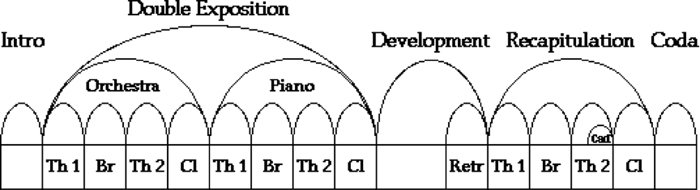
Before we begin, we need a little bit of background information: Sonata Form. This is one of the most popular forms of composers and music theorists alike. In its most distilled design, Sonata Form has three basic parts: the Exposition, the Development, and the Recapitulation. The goal of the exposition is to establish the piece’s musical themes. There are usually two: the primary theme and the secondary theme. The goal of the development is to explore different ways of presenting those themes. Finally, the goal of the recapitulation is to bring everything back home, stating the two themes as they were originally presented. The first movement of Beethoven’s fifth piano concerto uses the Double Exposition Form, a very close relative of the sonata form. The only difference is that the recapitulation repeats, allowing the pianist to play the themes before moving on to the melody.
Here is a simple graph depicting the double exposition form:
With this in mind, let’s jump right into the music!
I’ll be listening to Krystian Zimerman soloing with the Wiener Philharmonic under the baton of Leonard Bernstein.
The Introduction
Beethoven’s fifth piano concerto begins with the entire orchestra playing a single chord: E-flat major! (Hey, that’s the key in the title! Nice!) The piano virtuosically plays, demanding the spotlight. The orchestra rebuttals with another major chord: A-flat, the subdominant. Again, the piano flourishes in response. Finally, the orchestra plays the dominant major chord: B-flat with the seventh scale degree added (Bb7). The piano finishes it’s moment in the spotlight with some more runs and twirls before playing three chords, queueing the first exposition. This introduction is just a simple expansion on a basic chord progression: I-IV-V7. Most of you should find this familiar! Have you heard of Joan Jett & The Blackhearts? What about The Beatles? Both of them used the same chord progression in their songs. The only difference is the Beethoven’s chords are much longer! (Well, and different keys if you’ve got sharp ears!)
The First Exposition
The orchestra takes full control of the first exposition, letting the piano prepare for the work that is to come! Remember the role of the first exposition? It’s to establish the themes that are to be used for the entire piece. The primary theme, heard in the violins, is comprised of three important motifs or melody fragments: the Turn Motif, the Arpeggio Motif, and the Dotted Motif. These three motifs appear throughout the entire work in unique ways. (Don’t worry, I will point them out when we get there.) Right away, the dotted motif is given special recognition as it is accented by the horns, cellos, and basses. When the primary theme is repeated in the clarinets, the entire orchestra accents the dotted motif, giving the music a very militaristic feel. As the primary theme ends, Beethoven expands upon the arpeggio motif. The brass and violins regally pass this melody back and forth.
At this point, the primary theme has ended, and we enter a period of modulation. In musical terms, modulation is the process of changing key centers. You can think of it as transitional material.
This takes us into the secondary theme! The transitional material has brought us to E-flat minor. Do you hear how the tone of the piece has shifted? Compared to the bombastic nature of the primary theme, this almost sounds mystic. When the horns take the melody in the repeat, the piece is back in major. This is very reminiscent of the pastoral sounds of Beethoven’s earlier works.
As the horns die away, we enter another transitional period. Do you hear anything familiar? Beethoven takes the turn motif and repeats it, ushering in the cadence material.
The cadence material can be thought of as a “coda” of sorts for the exposition: the melody has ended and now we are extending the music before moving on to the next section. Here a couple of interesting ways that Beethoven extends the music:
- Takes the primary theme but removes the dotted motif
- Sequences, or repeats, the turn motif to build intensity in the music
- Descending scales
- Introduction of a new motif heard in the violins: the Candence Motif
As the cadence material nears its end, you will hear the dotted motif. Quietly at first, but then forcefully with the entire orchestra! Something very interesting happens during this section. As the dotted motif repeats and builds tension, you will hear something very crunchy. This is because Beethoven adds a C-flat into the B-flat dominant chord! This type of prolonged dissonance is very unusual for the classical era of music. This will make a lot more sense later on in the listening.
The piano enters with a chromatic scale, as it begins the second exposition.
The Second Exposition
The second exposition begins with piano alone stating the primary theme before immediately jumping into a virtuosic extension. The strings quietly enter, as if to refocus the piano before we hear something familiar again: The arpeggio theme being heroically passed back and forth between the brass and the strings.
The piano quietly reenters with the arpeggio theme as the orchestra steps back. We have our first major deviation from the first exposition here: the piano is playing in minor, creating a pensive mood.
We enter a moment of modulation and extension as we anticipate the secondary theme.
Everything that has occurred so far as been beautiful and exciting but ultimately, not very interesting as far as music theory goes. That is about to change with the entrance of the secondary theme. Standard music theory tells us that in the second exposition, the secondary theme should modulate to the dominant, in this case B-flat. However, as the secondary theme begins, we find ourselves in C-flat! Does that sound familiar? It should because at the end of the first exposition, Beethoven snuck in that C-flat before the piano entered. HE WAS TELLING US WHAT HE WAS GOING TO DO ALL ALONG! This shift in tonal center, along with the arrangement of the piano creates this peaceful sound. However, the peace won’t last forever because at the end of the piano’s iteration of the secondary theme, the entire orchestra barges in with the theme in the original key (E-flat) and in a march style as if to demand of the piano “NO! Play it this way!”
We enter a brief solo episode, allowing the piano to reflect on what just happened. During this solo episode, we find ourselves drifting through space. The turn motif attempts to reorient us but gets caught up in the whirl wind of notes. This all comes crashing down when the orchestra plays repeated fully diminished chords.
Luckily, the ship rights itself and we find ourselves back at the cadence material after the piano finished a long chromatic scale. As expected, we find ourselves in the key of the dominant, B-flat.
If you’re thinking to yourself, “Beethoven has to have something up his sleeve,” you’d be right! After a sequence on the turn motif and a modulating bridge, the trumpets enter with the dotted motif in G-minor. While this is not entirely unusual, Beethoven is playing with our expectation, leaving us wondering where we will be when the development finally arrives.
We suspect that we are going to be in G-minor as we enter its dominant key, D, for a while. The basses establish this with the turn motif!
As we prepare for the development, the piano enters with another chromatic scale before landing on a trill. You might suspect that we have entered the development here however, Beethoven painfully extends this final phrase, pushing the key away from G to C! (For all you music theory nerds out there, this works because he treats G as the dominant of C).
The Development
We finally enter the development in the key of C-minor! If you remember from the beginning of this article, the purpose of the development is to explore how the themes presented in the exposition can branch off and interact with each other. While the turn theme is present, I want you to pay more attention to how Beethoven uses the arpeggio theme here at the beginning of the development. Not only does he let the arpeggio keep falling, sinking us deeper into a musical depression, the orchestration is incredible as he passes the motif to lower and lower instruments.
When the music suddenly gets angry, hear the dotted motif ominously color the background in the strings. As the music grows with intensity, the entire orchestra picks up the dotted motif. The piano echoes. Interestingly, this is the first time that the piano acknowledges the dotted motif.
The piano enters a metamorphosis as it plays scales up and down. While the strings contrast the piano with opposing scales, interestingly enough, the only wind instrument is the bassoon playing the dotted motif.
With the return of the cadence motif, we have escaped this depressive state for now. You can hear how the turn motif in the cello and bass indicate that something is coming!
As the piano sequences the cadence motif, we find ourselves drifting further and further away from home. This is represented by the fully diminished arpeggios the piano plays. Luckily, the turn motif saves the day, reorienting us back into the dominant of E-flat. The entire orchestra fervently plays the turn motif as we enter the recapitulation!
The Recapitulation
The recapitulation begins with the introductory material. Remember the I-IV-V extension at the very beginning of the piece? Same thing here!
As we continue listening, everything goes according to plan and is rather unremarkable: the primary theme is presented with embellishment from the piano, modulating bridge, virtuosic piano extensions. This is everything we’ve heard before.
However, something truly interesting happens when we begin the secondary theme. We are expecting it to be in E-flat, just as it was in the first exposition. Instead, the theme is presented in D-flat! By all music theory knowledge, this is wrong! The theme needs to be presented in the right key before the piece ends. (Have patience, my friend).
Just as how the secondary theme played out in the second exposition, the orchestra storms in with the march in E-flat.
After this, things progress as expected: a solo episode, expansions on the turn theme, mild modulations as we move away and then come back to our home key, E-flat.
A chromatic scale and the return of the primary theme marks the cadence material. Fermatas (or notes held out long), prepare the piano for the cadenza, or the part of the work where the soloist improvises and shows off.
Before we continue, we must take a small deviation to talk about cadenzas. Like I just mentioned, the cadenza is a part of the piece where the soloist is expected to improvise and demonstrate their performative and compositional prowess. However, Beethoven wrote directly in the score “Play the cadenza exactly as is and continue with the music.” Many musicologists point to this piece as the “death of the creative performer” as Beethoven took all creative liberty away. Was it because he could not premiere this piece himself? Perhaps. Maybe it’s because he had a compositional idea he still needed to resolve? (hint hint: remember the secondary theme?) Let’s continue and find out.
Rather quickly into the cadenza, we land on a trill, which is a very common queue to the orchestra that the soloist is ready to move on. However, it’s a trill between B-flat and C-flat. (That pesky C-flat again!)
Our patience is rewarded as the piano plays the secondary theme in the correct key: E-flat! This is reinforced when the horns join in on the melody, which hasn’t happened since the first exposition! If Beethoven had left the cadenza to the whims of the performer, it is entirely possible that we would have never had this resolution.
Now that we are musically satisfied, it is time to enter the Coda, which is queued by a descending chromatic scale. At this point, Beethoven plays with tension and release as he build us towards the climax. What better to rally in this grand finale with none other than the royal, dotted motif!
With grandiose and flare, Beethoven concludes the first movement.
I hope you enjoyed this guided listening and if you are interested in attending an in-person guided listening, please leave a comment below!
0 Comments :