
PROGRAM NOTES: ERNEST BLOCH’s ‘Schelomo,’ Hebraic Rhapsody for Cello and Orchestra
Posted on February 18, 2019
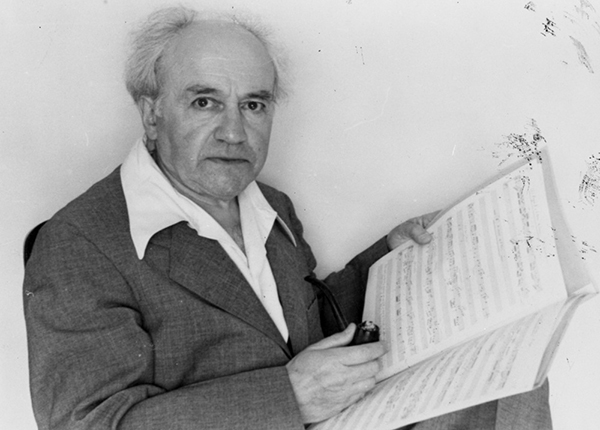
Photo fromThe Oregon Encyclopedia
Deeply disturbed by the suffering around him at the end of World War I, Swiss-born American composer Ernst Bloch sought inspiration for his newest composition from the biblical book of Ecclesiastes. The book features the story of King Solomon, whose name translates to Schelomo.
Considered by many to be his finest work, Schelomo was written at the end of Bloch’s “Jewish Cycle”, from 1915-1916. Bloch explained that rather than borrowing from pre-existing traditional Jewish folk melodies, “the most important thing is to write good and sincere music—my music. It is rather the Hebrew spirit that interests me, the complex, ardent, agitated soul that vibrates for me in the Bible.”
The relationship between the solo cello and orchestra in Schelomo is considerably more intertwined than in a typical concerto. The piece demonstrates an equal partnership where cello and orchestra take turns as the dominant voice. Schelomo is comprised of one movement in three large sections, featuring grand statements from the orchestra alternating with haunting lamentations from the cello. As declared in its full title, “Schelomo- Hebraic Rhapsody”, the work is indeed rhapsodic in nature: an episodic piece with highly contrasting emotions and expressions. Bloch’s Schelomo is a 20th century masterpiece that captures “the misery of the world” through universal themes of passion, suffering, and hope.
- Kira Wang, Winner of the 2018-19 PYP Concerto Competition
0 Comments :