
Notes Newsletter Student Spotlight: Addison Kearbey
Posted on February 6, 2025
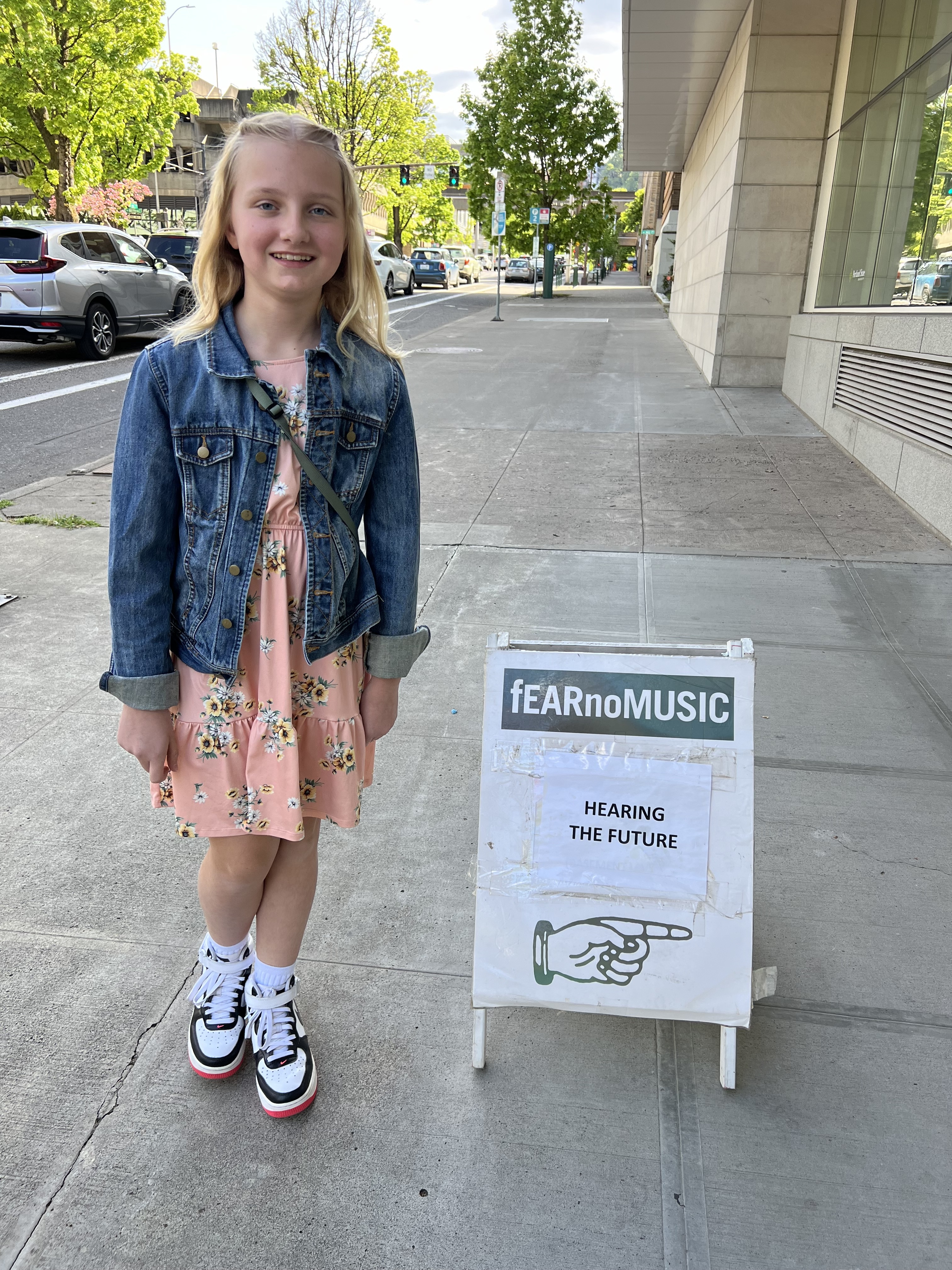
In this special edition of Student Spotlight, we are highlighting one of our student composers, Addison Kearbey. Addison is a 7th grade violist in PYSE and has been working very hard in composing a piece, Ascent, for the Cushion Concert on March 15.
What first brought you into music? What attracted you to your instrument?
I started playing piano when I was five, and only stopped last year to pursue more interests. When I was about nine I wanted to play the violin, because I loved the variety of sounds that it could produce, from peaceful to energetic to ferocious. Over the past four years, I have fallen in love with both violin and the power of playing in an orchestra. Recently, I have also started playing viola, first with my school orchestra and then with PYSE as well.
Do you have any hobbies outside of music?
I play goalkeeper for a club soccer team. Soccer is something I enjoy because it is great to be a part of a team and support each other. I also love reading, drawing, and building legos when I have time.
What got you into composition? Why do you like composing?
My first year in PYSE, we played a piece by another young composer. I was amazed that someone not much older than me could write something so beautiful, and I wondered if I could, too. So, I found the Young Composers Project (YCP), where professional musicians play pieces by kids. I love composing because I can put beautiful things, like sunsets and nature, into music.
How did you come up with the ideas in Ascent?
In August, my family and I summited South Sister. It was 13 miles round trip and about 5,000 ft of climb, and it was really hard! This was a major inspiration for my new piece, Ascent. However, it also applies to any challenge whether it is climbing a mountain, preparing for an audition, or studying for a test.
What is the structure of Ascent?
Ascent is in three movements. The first is the beginning of the challenge, with an adventurous feel, but with anticipation. The second is when you’re tired, and all you want to do is give up. But still, you keep on fighting each difficulty. Finally, the last is the celebration, when the goal that seemed so distant has become a reality. This movement is more dance-like and very energetic.
What should the audience be listening for when they hear your piece?
In my piece, there is a lot of counterpoint, so listen for how all of the different parts interact with different harmonies and melodies. A specific thing to look for is towards the end of the first movement, there is a canon section in which the cellos start with a short melody, repeated by the violas, second violins, and finally the first violins. Another cool part is in the beginning of the second movement, in which the four principals play a quartet together before the rest of the orchestra joins. In the third movement, there is a lot of specific articulation, which brings out certain melodies and sections of the piece.
Do you have any new projects coming up that you would like to tell us about?
At my middle school, in eighth grade, there is a capstone project. I will get to choose something to do it on and present it at the end of the year. I am planning on writing a piece for it, possibly as a score for a short movie or something similar. I am looking forward to that, because I can bring my love of composing into an important project for school.
1 Comment