
AMY BEACH and THE “GAELIC” SYMPHONY (Part 9 of 9)
Posted on October 1, 2019
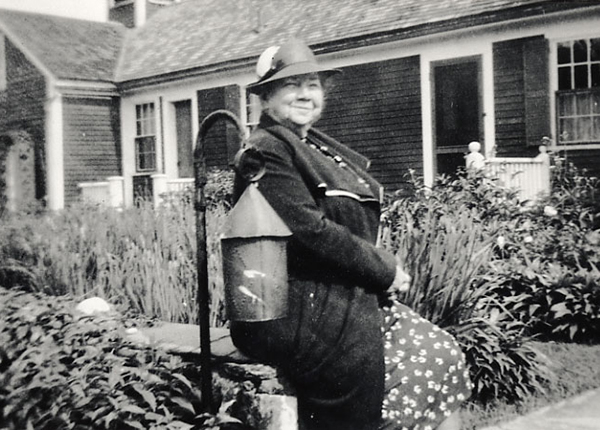
Amy Beach, probably around 1937-38,courtesy Special Collections, University of New Hampshire Library, Durham.
PYP performed Amy Beach‘s Gaelic Symphony on Saturday, November 9, 2019, at the Arlene Schnitzer Concert Hall. Click here to watch our performance.
Conclusion
That PYP’s performance of the “Gaelic” is a local premiere (as far as we can tell; if anyone knows of an orchestra in the Portland metropolitan region that has offered it, please let us know!) 123 years since it was created, or at least extremely rarely programmed, attests to the persistence of both the broad-brush low opinion of the Second New England School, as well as the ease with which valid women composers are sidelined from inclusion in “the canon”, even today.
Brandeis University musicologist Liane Curtis, president of the Women’s Philharmonic Advocacy organization, described, “People mistakenly think the playing ground was level in the past…If there were good women composers we would have heard of them, and the fact we haven’t heard of them means they aren’t very good. It’s very circular reasoning.” (Robin)
Amy Beach’s life straddled two seemingly irreconcilable worlds.
“Amy Beach was a product of her time, her region, her class, and her white Anglo-Saxon heritage – except when it came to her career….Her musical talent had led her into pathways that her family heritage and political and social conservatism might otherwise incline her to reject.” (Block, p. 248)
There’s no way around the fact that Beach’s politics were conservative in the extreme; according to Block, as soon as women could vote, Beach voted Republican, including against Roosevelt, every time, although she cherished her relationship with Eleanor Roosevelt and performed at the White House. She didn’t like the New Deal or the Works Progress Administration until she met musicians who were benefiting from it, at which point she changed her mind.
The WPA episode offers an interesting possible paradigm, in that it seems similar to her path with music: she voted and composed along the lines she’d been brought up in, conservative and on the verge of outdated, but when she got actual exposure to the world—of European modernist percussiveness/ dissonance, or actual artists whose lives were improved by government funding—she was open-minded enough to change her perspective based on experience.
(And yet sometimes maybe her conservative instincts combined with her open-mindedness to lead her *far* astray…according to Block’s citing of Beach’s diary, when Beach spent time in Rome in the late 20s with relatives of her late husband, she found herself admiring Mussolini along with them and their wealthy circle, despite full evidence of Mussolini’s violent, repressive fascism. She even offered to perform for him [he never accepted the offer, evidently claiming he was busy]!)
The fascinating binary that was Beach’s life meant that her inherited, instinctual conservatism existed, as Beach did for her first forty-four years, in contradiction. The woman who had, according to one scholar, “misgivings about Jews” (Horowitz), also constantly and reliably championed the cause of women in music, and of the music of oppressed groups e.g. the Irish, the Balkan peoples, and the Inuit in the concert hall.
Amy Beach became a dominant force in American classical music, for a while arguably the most famous of all American composers. For this reason it’s easy to take her accomplishment for granted, to lose sight of how incredible it is that she was able to play piano as she did, write what she did, develop as she did, with as much constraint as she experienced, given the magnitude of talent that was reined in for decades for the sake of propriety.
As with so much in Beach’s world, there are two ways of looking at her style over time, yet both seem to frame it negatively. One obituary acknowledges that “in her more recent works, she leaned more towards the ‘modern’ harmonies and the compositions lost some of the melodic interest they had formerly possessed.” Yet Brown points out that other critics find:
“the popularity of her compositions in the later twentieth century…waned because of her unwillingness to change her style or write in the newer, more extended musical vocabulary” (Brown, p. 107).
In other words, she either did change, and that was bad, or she didn’t change, and that was bad. Yet another critic devalues the quartet because it came too late; for her to have been in step with the times, it should have been written earlier. One can’t help but wonder what’s behind this determination to evaluate Beach’s work so negatively.
One sure point, however, is that Amy Beach never went to a nihilist or ‘brutal’ modernism, the kind that of dissonant, percussive modernism of, say, Bartok, Copland, or Cowell, to quote Block’s example (although she did write in a journal that she liked one piece by Bartok). (Incidentally, the aggressive modernism was associated by many critics (and probably artists too) with maleness, as romanticism was with femaleness; similar to the different associations between symphonies and art songs.) Block connects the constant sense of responsibility from her Bostonian upbringing to use the arts to improve life for all, to offer beauty, to the particular gentle way that her music explored dissonance and tonality when it finally did. The string quartet linked above is a perfect example.
And of course Beach’s *earlier* compositions would reflect what she’d been exposed to, and wouldn’t be cutting-edge modernism, because she was deliberately kept from any connection with the broader community beyond Boston; her upbringing simply precluded that kind of thinking.
Despite all these historical analyses and critiques along gendered and nationalistic lines, Beach’s “Gaelic” Symphony can speak to us in 2019, through its deliberate choices of melody and mood, as we consider how we as a country characterize and treat our most recent ‘huddled masses, yearning to breathe free’ just as the Irish yearned in the 1800s. And in an even larger sense, it is simply a beautiful, expansive, expressive (some say too expansive, but that can be ascribed to her “shielding” from any outside editing influence) symphony that can hold its own with any American work of that period.
SOURCES CITED
Jacob Avshalomov, Music is Where You Make It II. Portland: Portland Junior Symphony Association, 1979.
Alessandra Barabaschi, biography of Maud Powell on tarisio.com.
Adrienne Fried Block, Passionate Victorian: The Life and Work of an American Composer 1867-1944. New York: Oxford University Press, 1998.
Jonathan Blumhofer, “Rethinking the Repertoire #9 – Amy Beach’s “Gaelic” Symphony”. The Artsfuse at artsfuse.org; 3/10/2016.
Jeanell Wise Brown, Amy Beach and her Chamber Music: Biography, Documents, Style. Metuchen, NJ: 1994.
“To Be Rediscovered When You Were Never Forgotten: Florence Price and The “Rediscovered” Composer (Tropes of Black Composers, Part One).” The Burleigh Society website.
Aurore Eaton, “Looking Back with Aurore Eaton: The Celebrated Amy Beach returns to New Hampshire.” Manchester Union Leader, 8/27/2018.
Sarah Gerk, “’Common Joys, Sorrows, Adventures and Struggles’: Transnational Encounters in Amy Beach’s ‘Gaelic’ Symphony”. Journal of the Society for American Music (2016), Vol 10 no. 2, pp. 149-180.
James Greeson, “The Caged Bird: The Life and Music of Florence B. Price”. Arkansas Educational Televion Network website.
Joseph Horowitz, “Bottled Demons”, review of the Block biography. Times Literary Supplement, Nov 20, 1998.
Joseph Horowitz, “Reclaiming the Past: Musical Boston Reconsidered”. American Music: Vol 19, no. 1 (spring 2001), pp. 18-38.
Noel Ignatiev, How the Irish Became White. New York: Routledge, 1995.
Allan Kozinn, “Critics Notebook: Is it Artistry or Wishful Thinking?” New York Times, 9/22/1998.
The entire excellent website target=“_blank” rel=“noopener"http://www.maudpowell.org
“Mince Pies and Minor Chords: The Lyric Feature Broadcast” on Amy Beach, featuring JoAnn Falletta, of 9/1/17 (probably on the occasion of her 150th birthday, which was 9/5/2017)
William Robin, “Amy Beach, a Pioneering American Composer, Turns 150”. New York Times, Sept. 2, 2017, Sec AR, p. 7.
Nicole Marie Robinson, “To the Girl Who Wants to Compose”: Amy Beach as a Music Educator. Florida State University Master’s Thesis, 2013.
Douglas Shadle, Orchestrating the Nation: The Nineteenth Century American Symphonic Enterprise. New York: Oxford, 2015.
NEXT: Hear PYP perform Amy Beach‘s “Gaelic” Symphony
Learn more in our in-depth program notes:
- Part 1: Introduction - Amy the Pianist
- Part 2: Amy the Composer
- Part 3: Amy the Composer (Continued)
- Part 4: Amy and Her Contemporaries
- Part 5: Amy and Her Contemporaries (Continued)
- Part 6: The “Gaelic” Symphony
- Part 7: The “Gaelic” Symphony (Continued)
- Part 8: Performance History of the “Gaelic”
- Part 9: Conclusion
0 Comments :